
Finding a new place to live is super exciting until you realize your monthly expenses can extend far beyond that number on the lease. Here’s how to uncover the true cost of a neighborhood before you sign on the dotted line, so you’re prepared for everything.
Apartment hunting has a way of narrowing your vision. You scroll listings, compare square footage, weigh the trade-offs between a dishwasher and a balcony, and eventually land on a monthly rent that feels manageable. But rent is only the headline number. The neighborhood you choose quietly shapes dozens of other line items in your budget, some of them significant enough to change whether a “good deal” is actually good at all.
The encouraging news? Almost every one of these hidden costs can be researched online before you even tour a unit. Here’s a practical guide to the expenses renters often overlook, and how to investigate them from your couch.
Commute Costs: The Expense That Hides in Plain Sight
A slightly cheaper apartment 15 miles farther from your workplace might look like a win on paper, but transportation costs can erode that savings fast. According to AAA, the average cost of owning and operating a vehicle in the United States now exceeds $12,000 per year. Even small differences in commute distance, say, ten extra miles each way, add up in fuel, tire wear, and maintenance over 12 months.
Before committing to a neighborhood, plug the address of the rental apartment you want into a commute calculator. Google Maps will estimate drive times at different hours, and transit apps like Moovit or the local transit authority’s trip planner will tell you whether public transportation is a viable option. If you can ditch a car entirely or reduce your driving by choosing a transit-friendly neighborhood, the monthly savings can dwarf any difference in rent.
Tools on platforms like Proximitii make this even easier by letting you see what’s actually near a property — grocery stores, transit stops, schools, and more — so you can weigh convenience against cost in one view.
Utilities: Not All Zip Codes Are Created Equal
Utility costs vary more than most people realize, and the variation isn’t random. Older housing stock tends to be less energy-efficient, meaning higher heating and cooling bills. Some neighborhoods are served by municipal utilities with lower rates, while others rely on private providers that charge a premium. Water and sewer rates can swing dramatically from one municipality to the next, even within the same metro area.
Start by checking the utility providers for the address you’re considering. Most electric and gas companies publish average bills by zip code or service area on their websites. If the listing doesn’t specify which utilities are included in the rent, ask, and then estimate the rest. A well-insulated apartment in a mild climate zone might cost $80 a month in utilities; a drafty rental in an area with extreme temperatures could easily triple that.
Grocery Prices and Food Access
Where you live determines where you shop, and where you shop determines what you pay. Neighborhoods classified as food deserts (areas with limited access to affordable, nutritious food) often force residents to rely on smaller convenience stores with higher markups or drive farther to reach a full-service grocery store.
Check what grocery options exist near a prospective apartment using mapping tools or neighborhood profiles on sites like Proximitii. If the nearest supermarket is a 20-minute drive rather than a 5-minute walk, factor in the extra time, fuel, and the temptation to grab takeout instead. Those costs compound week after week.
Insurance Rates: Your Address Matters More Than You Think
Renters insurance is relatively affordable in most places, but its cost is influenced by your neighborhood’s crime rate, flood zone classification, and proximity to a fire station. A policy that runs $15 a month in one zip code might cost $35 in another.
Auto insurance is even more sensitive to location. Insurers use your address to assess risk based on traffic density, theft rates, and the history of claims in the area. Moving just a few miles can shift your premium by hundreds of dollars annually. Before you sign a lease, run a quick quote on a comparison site using the new address to see how your rates might change.
Parking: The Silent Budget Killer
In many urban neighborhoods, parking is not included with your apartment, or if it is, a reserved spot comes at an extra monthly fee that can range from $50 to $300 or more. Street parking may be “free” in theory but require a residential permit that costs money and patience.
Check the parking situation online through the city’s transportation or parking authority website, or simply look at the rental listing’s fine print. Forums like Reddit’s city-specific subreddits are surprisingly good sources for the real story on how tough it is to find a spot on a Tuesday night.
Taxes, Fees, and the Costs That Pass Through
Renters don’t pay property taxes directly, but they pay them indirectly. Landlords bake those costs into the rent. More immediately relevant are local fees that hit you personally: trash collection fees not covered by the city, mandatory recycling charges, stormwater fees, and even local income or occupational taxes that some municipalities levy on top of state taxes.
A quick search for “[city or county name] local taxes and fees” usually surfaces this information. It’s not glamorous reading, but discovering a 2% local income tax after you’ve already moved is far less pleasant.
Internet and Connectivity
Remote work has turned reliable internet from a nice-to-have into a necessity for many renters. Not every neighborhood has the same provider options, and in areas with limited competition, you may find yourself paying more for slower speeds.
Check broadband availability at an address using the FCC’s broadband map or by searching providers directly. If only one company offers service in that area, you’ll have little leverage on price.
The Big Picture
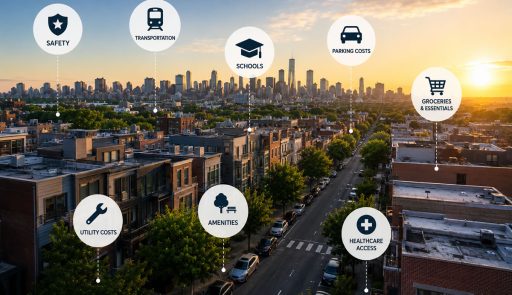
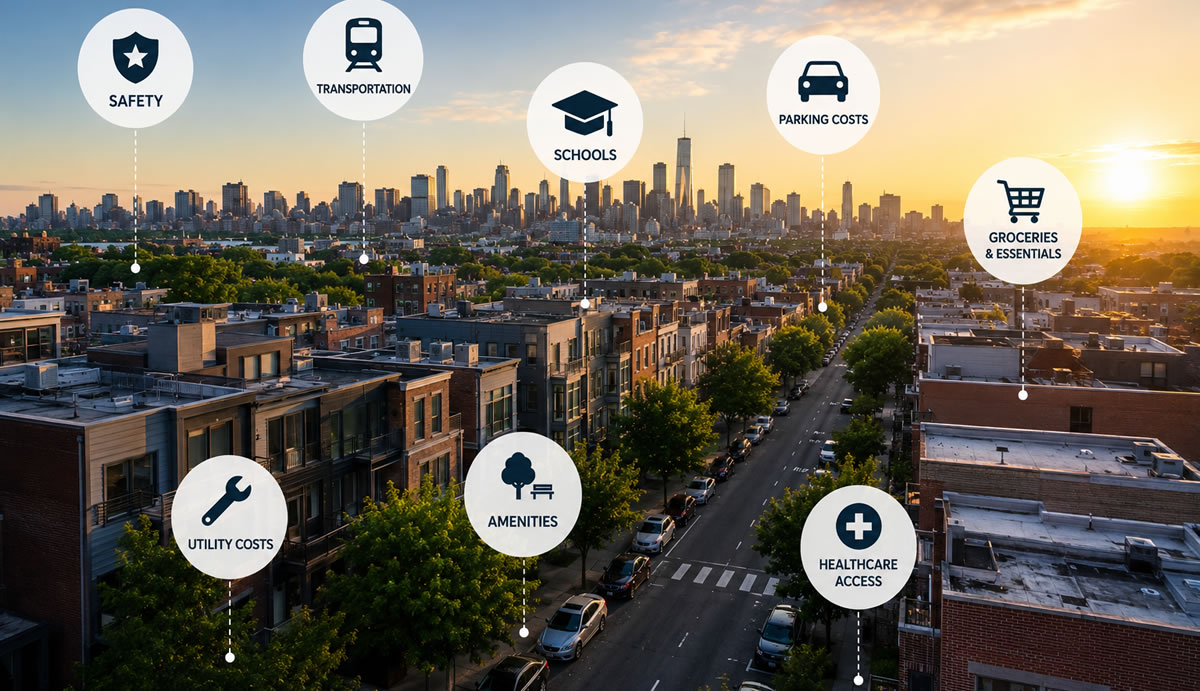
The smartest move any renter can make is to stop evaluating apartments in isolation and start evaluating neighborhoods as complete financial ecosystems. Two apartments with identical rent can produce wildly different monthly budgets once you account for transportation, utilities, groceries, insurance, or parking.
Build a simple spreadsheet with columns for each important category. Research each cost for every neighborhood you’re seriously considering. The 30 minutes you spend on this exercise could save you thousands of dollars over the life of a lease.
Start With the Right Tools
The beauty of renting in the modern era is that nearly all of this information is available online, often for free. The challenge is knowing where to look and having the discipline to look before the excitement of a new apartment sweeps you along.
Start exploring neighborhoods on Proximitii and see the full picture before you sign your next lease.