
Walkability has become one of the defining factors in how people choose where to live. Today’s buyers are placing less emphasis on how large a home is and more focus on how easily daily life works once they step outside. Being able to walk to coffee, grocery stores, restaurants, parks, or public transit has shifted from a luxury to an expectation in many markets.
As walkable neighborhoods continue to outperform others in demand and long-term appeal, understanding what truly makes an area walkable has never been more important. While sidewalks matter, true walkability is driven by proximity to everyday amenities, compact design, transit access, and active street life.
Using lifestyle-based neighborhood data, including Proximitii Scores that evaluate walkability alongside access to amenities and daily conveniences, the following five neighborhoods all came back with a perfect 10/10 walkability score and consistently stand out as some of the most walkable places to live in the United States.
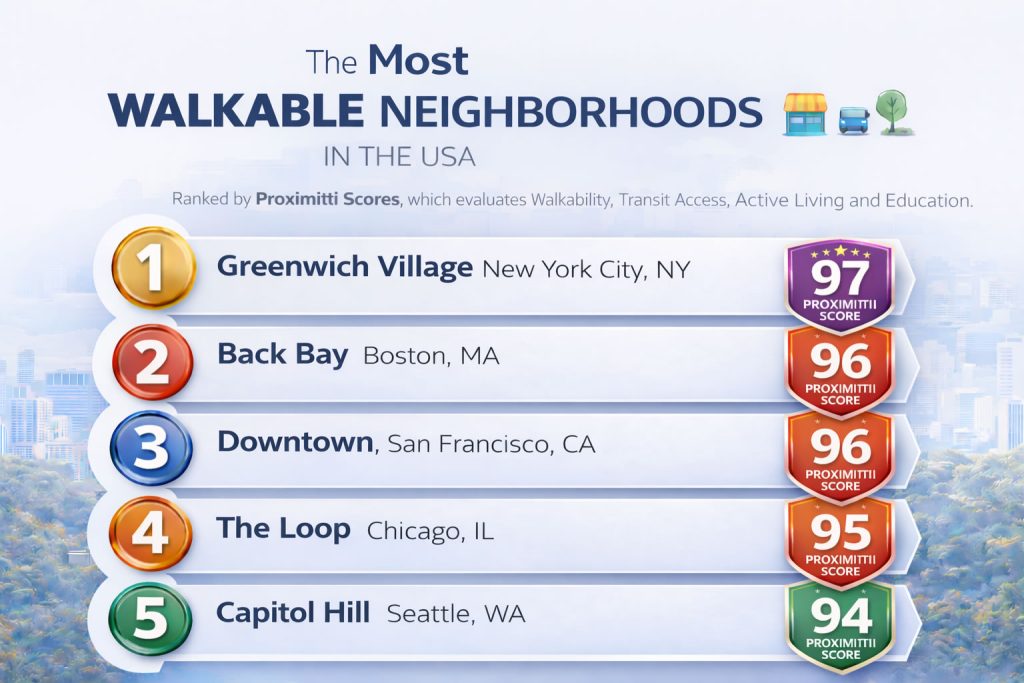
1. Greenwich Village — New York City, NY
Proximitii Score: 97/100
Greenwich Village sets the benchmark for walkability in the United States. With one of the highest Proximitii Scores nationwide, the neighborhood exemplifies what happens when density, amenities, and connectivity align perfectly.
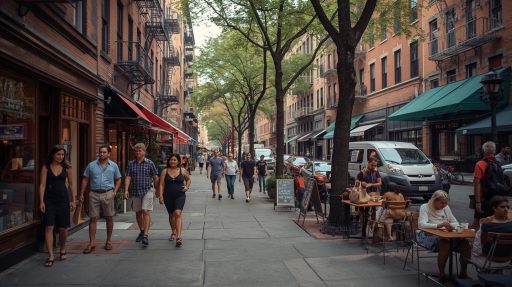
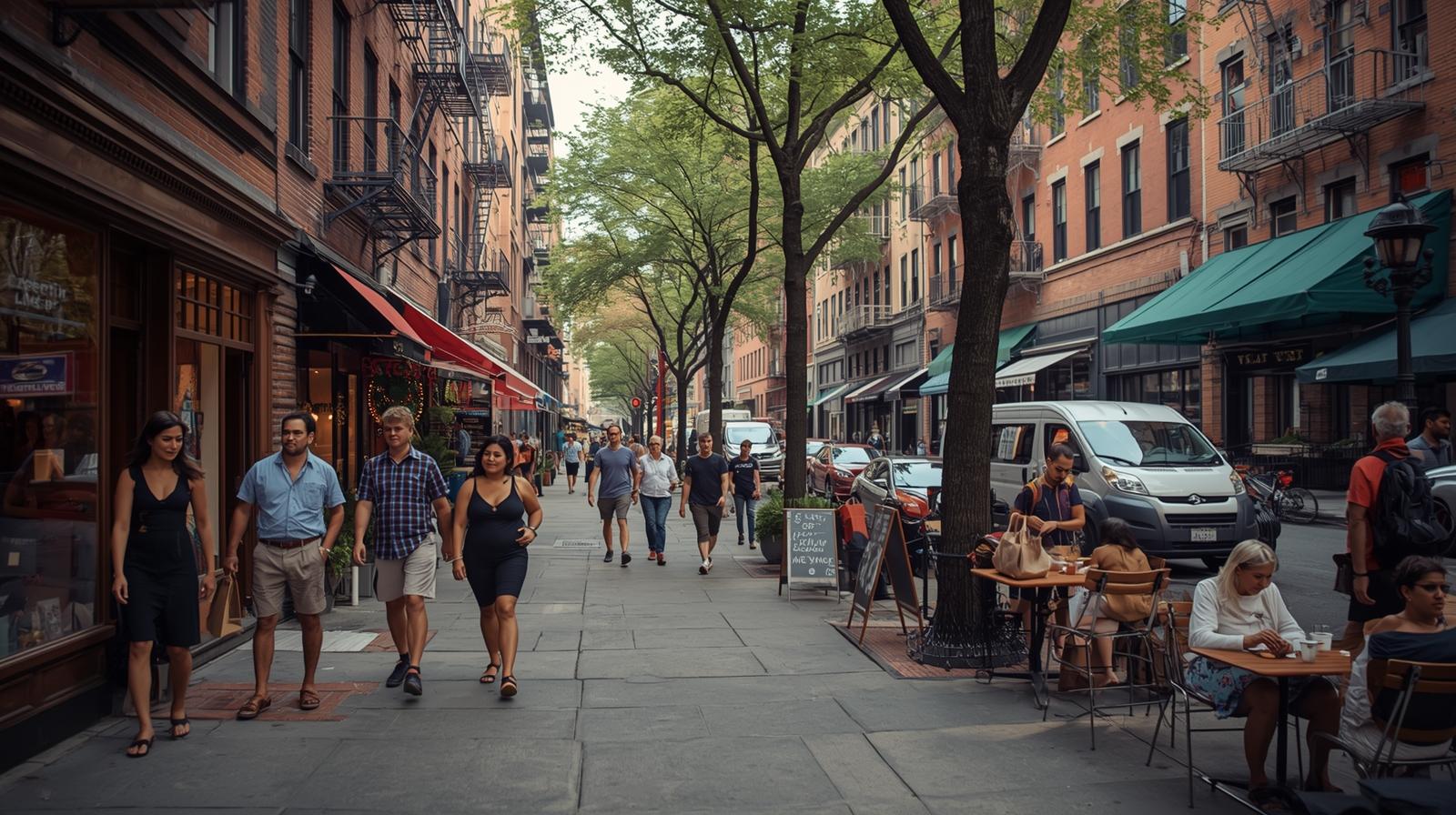
Daily life in Greenwich Village can be managed almost entirely on foot. Residents are surrounded by grocery stores, cafés, restaurants, coffee shops, parks, nightlife, and cultural venues — often within a few blocks of their homes. Subway access is abundant, but many residents rarely need it for local errands.
The neighborhood’s compact street grid, historic mixed-use buildings, and constant pedestrian activity make walking both efficient and enjoyable. From morning coffee to late-night dining, nearly every routine can be completed without a car.
Greenwich Village’s exceptionally high walkability, supported by unmatched amenity density, is reflected clearly in its Proximitii Score of 97 — one of the highest lifestyle scores recorded nationwide.
2. Back Bay — Boston, MA
Proximitii Score: 96/100
Back Bay combines classic urban design with modern convenience, earning it a Proximitii Score of 96 and placing it among the most walkable neighborhoods in the country.
Designed long before car-centric planning became the norm, Back Bay features short blocks, wide sidewalks, and excellent street connectivity. Newbury Street anchors the neighborhood with walkable retail, dining, cafés, and entertainment, while grocery stores, pharmacies, and daily services are all easily accessible.
Transit access further strengthens walkability, allowing residents to rely on a combination of walking and public transportation for nearly all daily needs. Parks, cultural institutions, and employment centers sit within close proximity, reinforcing the neighborhood’s live-work-play structure.
Back Bay’s ability to balance historic charm with modern lifestyle convenience makes it one of the strongest examples of walkability in the Northeast.
3. Downtown — San Francisco, CA
Proximitii Score: 96/100
Despite its hills, Downtown San Francisco consistently ranks as one of the most walkable urban environments in the United States. With a Proximitii Score of 96, the neighborhood benefits from exceptional amenity access and dense mixed-use development.
Restaurants, grocery stores, shopping districts, coffee shops, entertainment venues, and offices are concentrated within short distances. Many residents find that daily errands can be completed within a few city blocks.
Transit integration further enhances walkability, allowing walking to serve as the primary mode of transportation with rail and bus systems acting as extensions rather than necessities. The presence of neighborhood retail corridors ensures that services remain close to residential areas.
Downtown San Francisco’s walkability is not accidental — it is the product of density, destination clustering, and decades of pedestrian-focused urban form.
4. The Loop — Chicago, IL
Proximitii Score: 95/100
The Loop demonstrates how a large downtown core can still function as a walkable neighborhood. With a Proximitii Score of 95, it stands out for its connectivity, transit access, and concentration of daily amenities.
Unlike many central business districts that empty after business hours, the Loop supports residential living alongside employment, dining, retail, and entertainment. Grocery stores, restaurants, cultural venues, and green spaces are all accessible on foot.
Wide sidewalks, consistent block patterns, and predictable street layouts make navigating the neighborhood straightforward. Lakefront paths and nearby parks further extend walkability beyond daily errands into recreation.
The Loop’s high Proximitii Score reflects its ability to support everyday life without reliance on a vehicle — even within a major metropolitan core.
5. Capitol Hill — Seattle, WA
Proximitii Score: 94/100
Capitol Hill rounds out the list with a Proximitii Score of 94, standing as one of the most walkable neighborhoods in the Pacific Northwest.
Known for its vibrant street life, Capitol Hill offers dense access to restaurants, cafés, grocery stores, nightlife, retail, and entertainment. Daily destinations are tightly clustered, making walking the most convenient way to get around.
Transit access, including light rail connections, complements walkability and expands reach beyond the neighborhood. Public parks, cultural venues, and community gathering spaces are woven directly into the urban fabric.
Capitol Hill’s consistent pedestrian activity throughout the day reinforces safety, convenience, and neighborhood energy — all key components of true walkability.
What These Walkable Neighborhoods Have in Common
Although these neighborhoods are spread across different regions, several shared characteristics consistently appear.
They feature high densities of everyday amenities such as food, groceries, shopping, entertainment, and coffee shops. Their layouts are compact, with connected streets and short blocks that make walking practical rather than burdensome.
Transit access enhances — rather than replaces — walkability, and streets are designed at a human scale with active storefronts and visible destinations.
These traits are exactly what lifestyle-based neighborhood data captures, helping explain why each of these areas earns such strong Proximitii Scores.
Walkability Is About Lifestyle, Not Just Infrastructure
Sidewalks alone do not make a neighborhood walkable. True walkability depends on whether walking fits naturally into daily routines.
That means being able to grab coffee, shop for groceries, meet friends for dinner, or attend events without planning a drive. Amenity access is what transforms walking from a possibility into a habit.
This is why walkability is increasingly evaluated through lifestyle categories rather than isolated design metrics.
How Proximitii Measures Walkability
The Proximitii Walkability category focuses on how easily residents can reach the destinations they use most often and also how many of these amenities are within a reasonable walking distance.
Rather than relying on a single index, walkability is evaluated through access to key amenities including food and drink, grocery stores, shopping, entertainment, and coffee shops. These categories reflect how people actually move through their neighborhoods each day.
When these amenities are nearby and concentrated, neighborhoods naturally support walking — which is reflected in higher Proximitii Scores.
Why Walkable Neighborhoods Continue to Attract Demand
Walkable neighborhoods consistently outperform because they offer flexibility, convenience, and long-term lifestyle value. Residents spend less time commuting, rely less on vehicles, and enjoy stronger connections to their community.
As buyers place greater emphasis on quality of life, walkability has become one of the strongest predictors of neighborhood desirability.
From dense urban cores to mixed-use districts, the ability to walk to everyday essentials remains one of the clearest indicators of livability.
The Bottom Line
The most walkable neighborhoods in the United States share one defining trait: they make daily life easier.
Greenwich Village, Back Bay, Downtown San Francisco, The Loop, and Capitol Hill all demonstrate how amenity access, compact design, and connected streets create environments where walking feels natural — not forced.
Their strong Proximitii Scores reflect this reality, highlighting how walkability remains one of the most powerful drivers of neighborhood quality and long-term appeal.