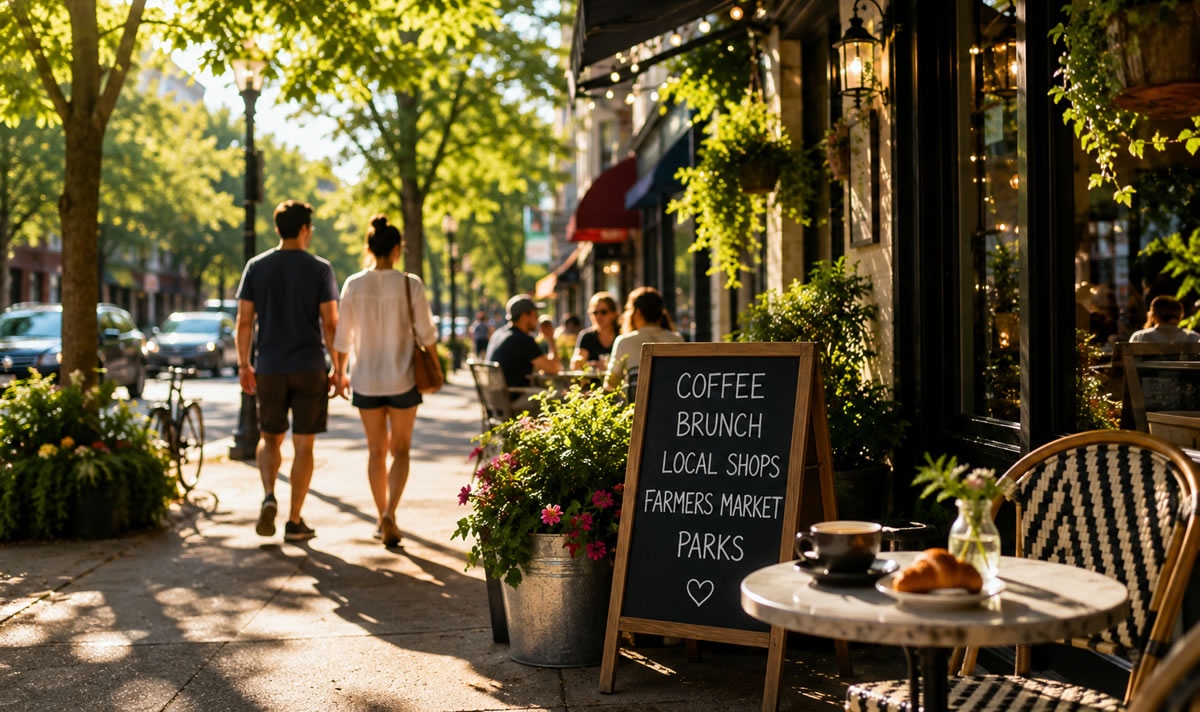

Some neighborhoods look great on paper.
They have strong home values, low crime rates, and trendy restaurants. But when you actually live there, daily life can still feel difficult. You drive everywhere. Errands take too long. Coffee shops are spread out. Parks aren’t nearby. Parking becomes part of your routine.
And then there are neighborhoods that feel completely different.
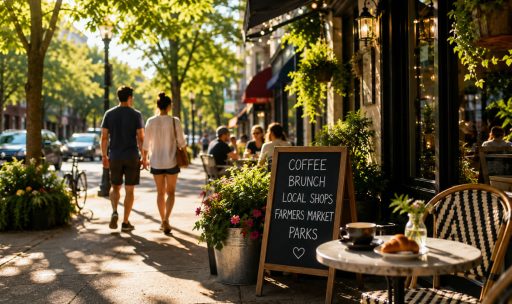
Places where a Sunday morning unfolds naturally. You walk outside without a plan. Coffee is a few blocks away. A park sits around the corner. Brunch patios are already filling up. Maybe there’s a bookstore nearby, a bakery, or a farmers market. You never think about traffic, and you rarely feel rushed.
That feeling is what we’re calling the Sunday Morning Test.
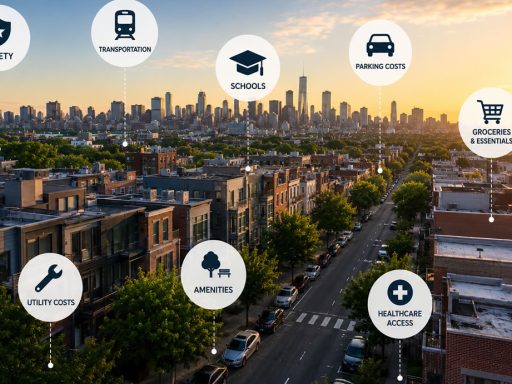
At Proximitii, we analyze neighborhoods using hyperlocal data tied to walkability, transit access, amenities, active living, and everyday convenience. The Sunday Morning Test takes that data and asks a more human question:
Which neighborhoods make everyday life feel effortless?
These are the places where proximity changes behavior. People walk more. Spend less time commuting. Discover local businesses more often. And ultimately feel more connected to where they live.
Here are 10 neighborhoods that pass the Sunday Morning Test better than almost anywhere else in America.
1. Greenwich Village, New York
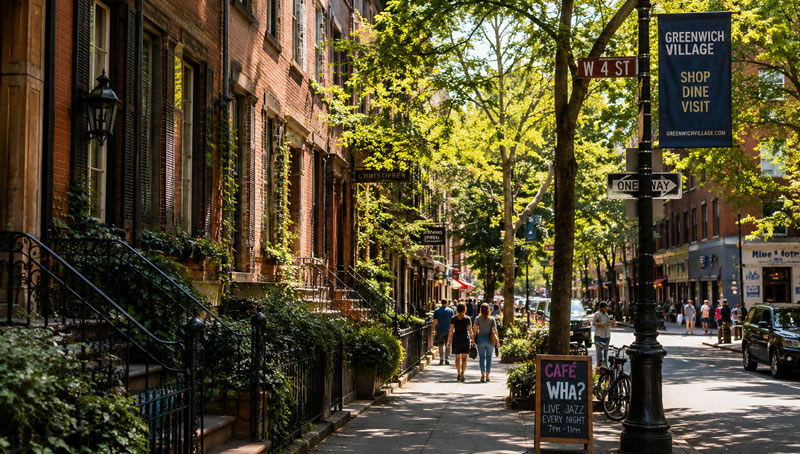
Greenwich Village feels like the neighborhood version of a perfectly planned Sunday that somehow happened by accident.
You start the morning with coffee at Tartinery Café – Bar | Greenwich Village, then wander toward Washington Square Park while street musicians play nearby. A few blocks later, you pass small bookstores, bakeries, and historic brownstones before stopping at a neighborhood grocery like Trader Joe’s or Murray’s Cheese for something to cook later.
Even the smaller details feel intentional here. Narrow streets slow traffic down. Cafes spill onto sidewalks. Corner delis stay active all day.
The beauty of Greenwich Village is that you never need to “go somewhere else” to enjoy your day. The neighborhood itself becomes the experience.
2. Back Bay, Boston
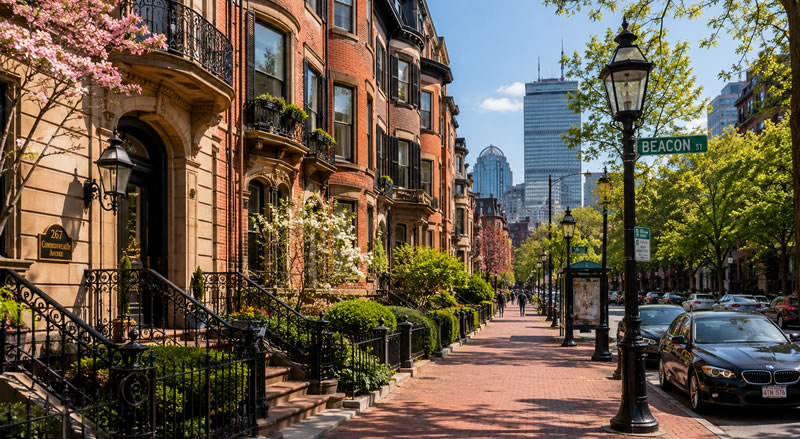
Back Bay may be one of the most polished urban neighborhoods in America.
A typical Sunday morning starts with coffee or brunch at Cafe Landwer before walking down Newbury Street past boutiques, cafes, and historic architecture. Within minutes, you can be along the Charles River Esplanade, one of the best waterfront urban walking routes in the country.
Need groceries? Whole Foods, Trader Joe’s, and smaller local markets are all woven directly into the neighborhood.
Nothing feels far away in Back Bay. The streets are compact, beautiful, and human-scaled, making even basic errands feel enjoyable instead of transactional.
3. Capitol Hill, Seattle
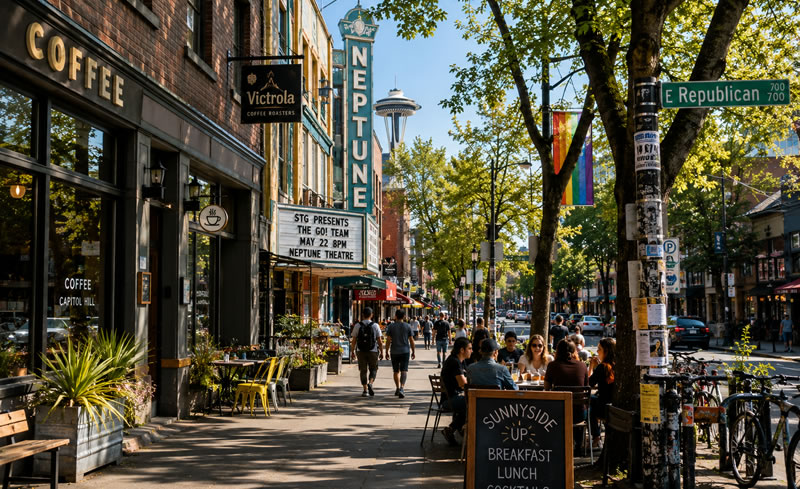
Capitol Hill feels built around coffee culture, independent businesses, and spontaneous plans.
A Sunday here might begin at Café Hagen or Post Pike Bar & Cafe before walking through Volunteer Park or browsing local record shops and bookstores along Pike and Pine.
The neighborhood is dense with small businesses, which creates constant activity without overwhelming the area. Grocery stores, cafes, bars, and restaurants all exist within a short walk of each other, and transit access makes it easy to move around Seattle without a car.
Capitol Hill succeeds because it feels lived in. It encourages lingering.
4. Silver Lake, Los Angeles
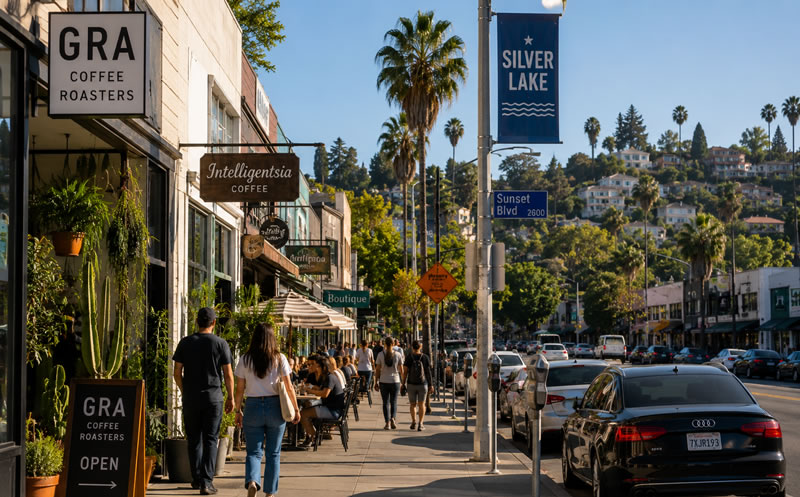
Silver Lake is one of the few neighborhoods in Los Angeles where life feels truly local.
People actually walk here. They sit outside. They spend time in cafes instead of rushing between parking lots.
A Sunday morning often starts at Gong Gan before walking Sunset Boulevard past vintage stores, bakeries, patios, and small boutiques. The Silver Lake Reservoir becomes a natural stop for dog walking or jogging, while nearby markets and coffee shops keep the neighborhood active throughout the day.
What makes Silver Lake different from much of LA is proximity. You can realistically spend an entire day within a small radius without feeling limited.
5. Pearl District, Portland
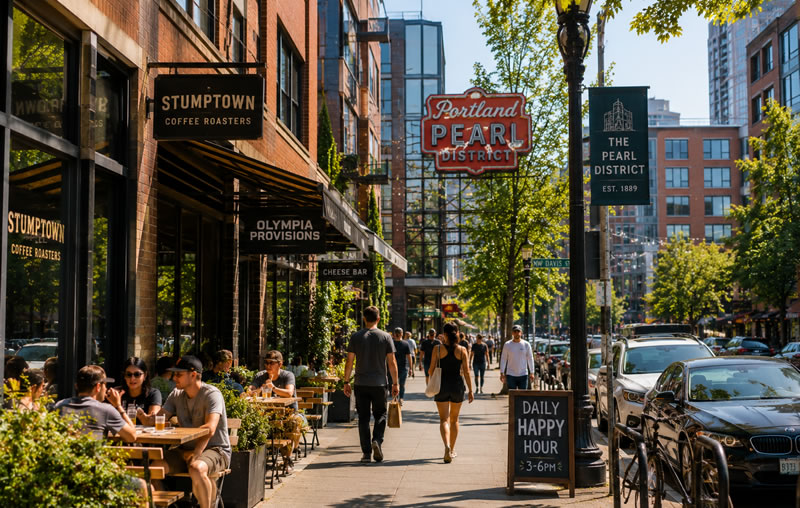
The Pearl District feels effortless in a way few neighborhoods do.
You can start with coffee at Ovation Coffee & Tea, walk a few blocks to brunch at Screen Door Pearl District, then spend the afternoon browsing bookstores, parks, breweries, or the nearby waterfront.
The neighborhood was designed around walkability. Grocery stores, transit, cafes, and public spaces are tightly integrated into a compact street grid, making almost every daily errand possible on foot.
Even the pace feels different here. The Pearl District encourages slower living, which is exactly why it performs so well on the Sunday Morning Test.
6. Wicker Park, Chicago
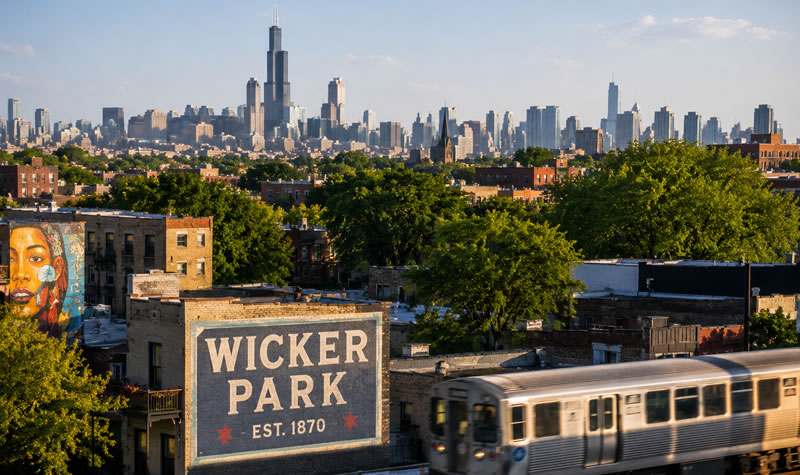
Wicker Park combines creative energy with genuine livability.
The neighborhood revolves around Milwaukee Avenue, where cafes, brunch spots, bookstores, bars, and boutiques create one of the most walkable corridors in Chicago.
A Sunday here might mean grabbing coffee at The Wormhole Coffee, brunch at Dove’s Luncheonette, then walking through Wicker Park itself before stopping at local shops or record stores.
CTA access keeps the neighborhood connected to the rest of the city, but most residents rarely need to leave the area for everyday life.
That balance between activity and convenience is what makes Wicker Park special.
7. South Congress, Austin
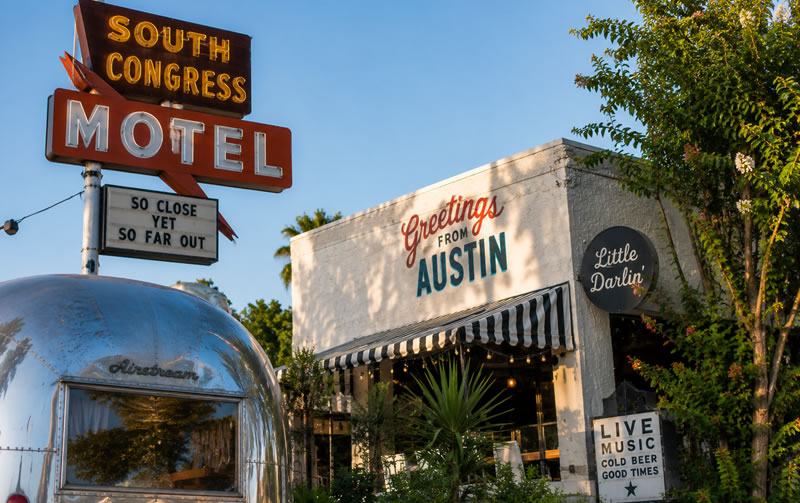
South Congress feels like Austin compressed into one neighborhood.
The sidewalks stay busy all day with people moving between coffee shops, breakfast taco spots, boutiques, and live music venues. Jo’s Coffee, Home Slice Pizza, and Magnolia Cafe have become neighborhood staples because they reinforce the idea that daily life here happens outdoors and on foot.
Unlike many auto-oriented areas, South Congress rewards wandering. You don’t need a destination. The neighborhood itself becomes the activity.
That creates a very different kind of lifestyle rhythm.
8. Old Town Alexandria, Alexandria
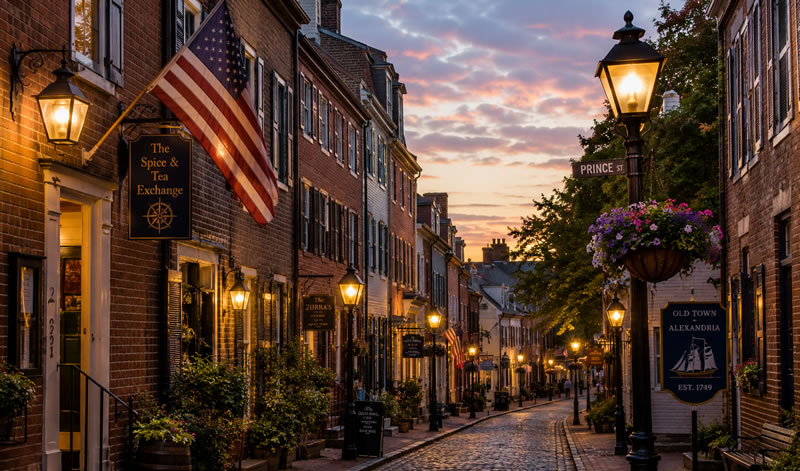
Old Town Alexandria feels almost cinematic on a Sunday morning.
Cobblestone streets, waterfront paths, historic buildings, and compact retail blocks create one of the most naturally walkable environments in the country.
Residents can grab coffee near King Street, walk along the Potomac River, stop at local boutiques, then finish brunch at one of the many patios lining the neighborhood.
What stands out most is how calm everything feels. The neighborhood encourages walking slowly instead of rushing between destinations.
9. North Park, San Diego
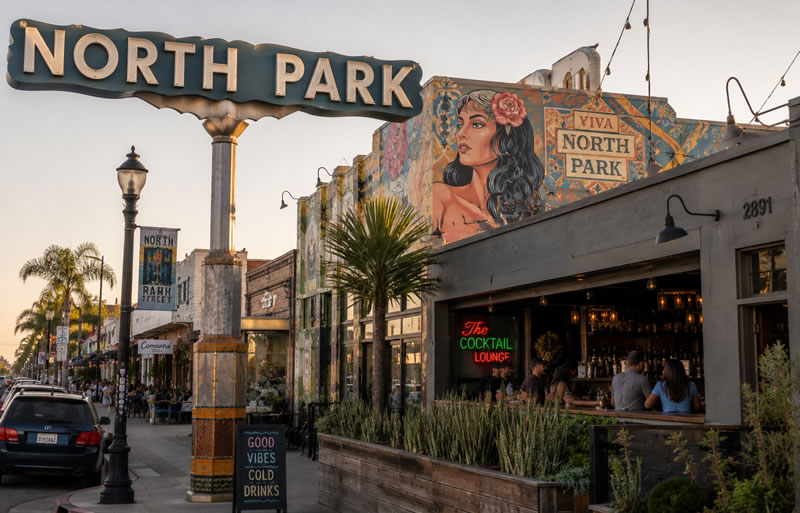
North Park blends Southern California weather with one of the strongest neighborhood cultures in the region.
The area is packed with coffee shops, breweries, restaurants, fitness studios, and local retail, all connected through walkable streets.
A Sunday here might include coffee at Communal Coffee, brunch nearby, then an afternoon exploring local breweries or spending time in Balboa Park.
The neighborhood feels active without being chaotic, which creates an ideal balance for everyday living.
10. Downtown Boulder, Boulder
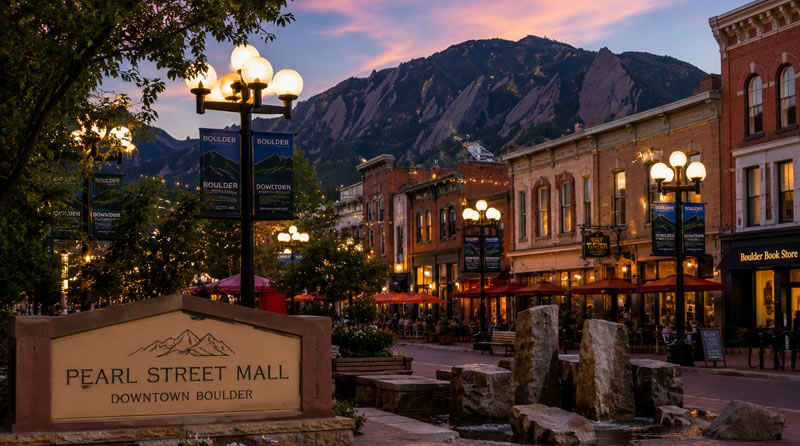
Downtown Boulder offers a completely different version of effortless living.
Instead of nightlife or density driving the experience, it’s outdoor access and proximity to nature. Residents can grab coffee downtown, walk Pearl Street Mall, then be on a hiking trail within minutes.
The neighborhood combines:
- cafes
- local retail
- restaurants
- bike infrastructure
- parks
- trail access
into one highly connected environment.
In Boulder, recreation isn’t something you schedule. It’s simply part of daily life.
What These Neighborhoods Have in Common
Although these neighborhoods are spread across different cities and climates, they all share a few critical characteristics.
They offer:
- high density of amenities
- strong walkability
- easy access to parks and public space
- localized retail and dining
- reduced dependence on driving
- strong “third place” culture
Most importantly, they reduce effort.
That’s the hidden factor behind livability.
The best neighborhoods aren’t necessarily the flashiest or most expensive. They’re the places where daily routines feel easy, intuitive, and enjoyable.
Why This Matters More Than Ever
As more people prioritize flexibility, remote work, and quality of life, the idea of proximity has become far more important.
People increasingly want neighborhoods where:
- errands don’t require planning
- social life happens naturally
- public spaces are nearby
- walking becomes part of daily life
In many ways, the Sunday Morning Test is really measuring something bigger:
How much friction exists in everyday life?
The neighborhoods that score highest tend to remove that friction completely.